



Blog
Evidence based insights on nutrition, health, and human development across the lifespan
Better school food is welcome. But what about the children who can’t eat it?
The 2026 School Food Standards reforms are a real step forward — but for children with feeding difficulties, quality on the plate is only part of the answer.
Postnatal nutrition: nourishing yourself while feeding your baby
The postnatal period places enormous demands on your body. What the evidence says about nutrition for new mothers — iron, omega-3, breastfeeding myths, and practical strategies.
Learning to like: why eating is a skill your child is still developing
Eating is learned. Understanding the developmental steps behind how children build comfort with food, and why patience and low-pressure exposure matter more than persuasion.
Diet and inflammation: what the research tells us about food and your child’s health
Low-grade inflammation in childhood is linked to long-term health outcomes. What a systematic review of 53 studies reveals about dietary patterns and inflammatory markers in children.
The words we use around food: a guide to language that supports your child
The way we talk about food shapes how children feel about eating. Practical language swaps to reduce pressure, support feeding difficulties, and create calmer mealtimes.
Why “they’ll eat when they’re hungry” isn’t always true
Feeding difficulties go beyond fussy eating. Learn why some children need specialist support, what feeding therapy looks like, and when to seek help.
The power of ‘yet’: how one small word can shift your child’s relationship with food
How the word ‘yet’ can gently shift a child’s fixed identity around food. Understanding the role of language in feeding difficulties and why small changes matter.
Why eating is harder than it looks: understanding swallowing and feeding development
Swallowing involves over 30 muscles and four distinct stages. Understanding what is actually involved helps make sense of why some children find eating difficult.
Omega-3 and your child’s brain: what the evidence tells us
What the evidence tells us about omega-3 fatty acids, brain development in children, and how EPA and DHA support attention, mood, and cognitive function.
Growing strong: nutrition for children and adolescents
Childhood and adolescence are formative periods for nutrition. Understanding what children need and finding an approach that works for your family.
Sensory feeding difficulties: what parents need to know
When a child gags at textures, refuses anything wet or lumpy, or can only eat crunchy foods, sensory processing may be the reason. Understanding sensory feeding difficulties and how specialist support can help.
Autism and eating: why mealtimes can feel different
Eating can look different for children with autism. Understanding why mealtimes feel harder, and how a neuro-affirming approach to feeding support can help.
What is ARFID? A parent’s guide to Avoidant/Restrictive Food Intake Disorder
ARFID is a recognised eating disorder, but it doesn’t look like anorexia or bulimia. Learn what ARFID actually looks like, how it differs from typical picky eating, and when to seek specialist support.
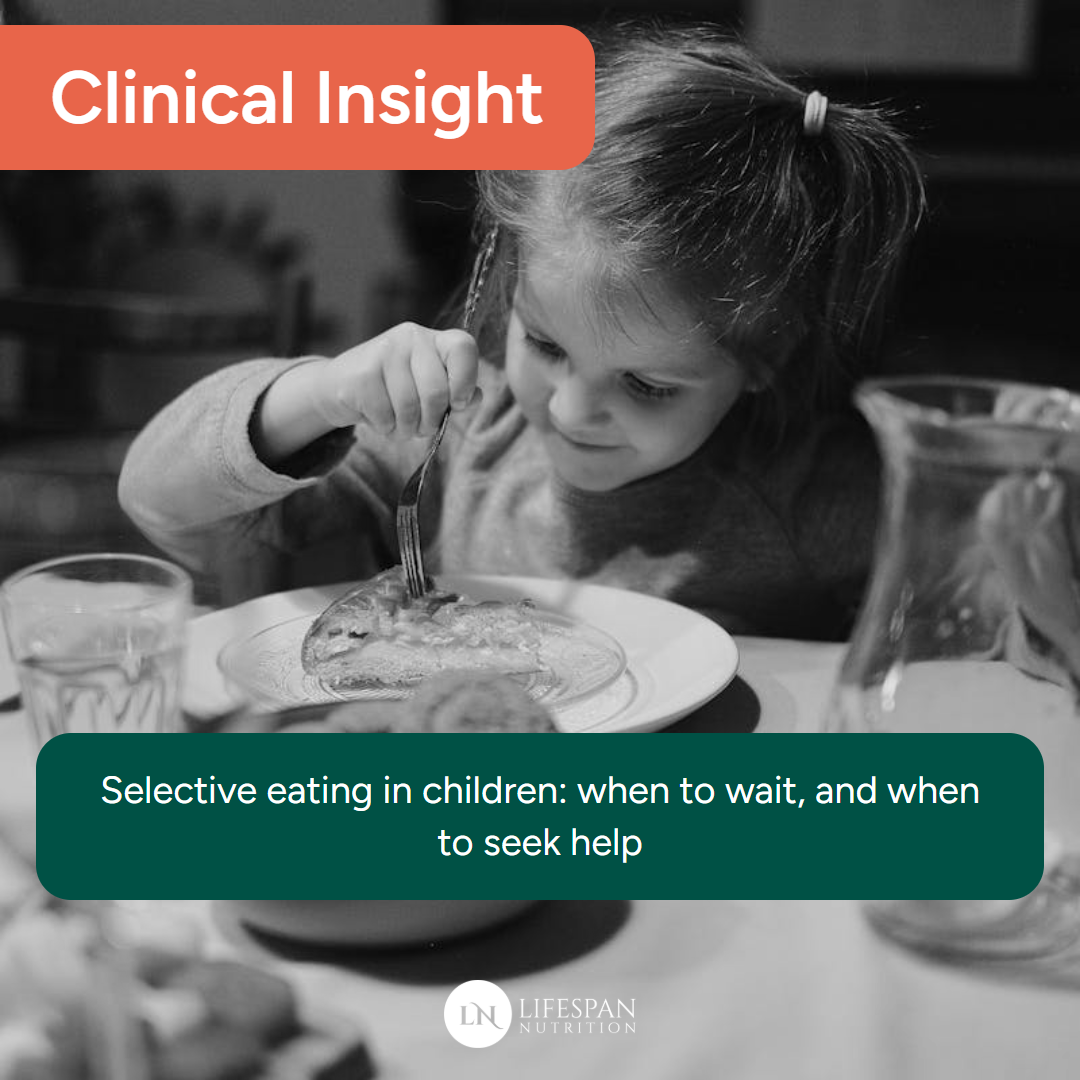
Selective eating in children: when to wait, and when to seek help
Understanding the difference between typical food selectivity and clinical feeding difficulty. When selective eating is normal development, and when to seek specialist support.